Source brown gymnastics rings for Home Gymnasium and Park
Compare 30 listings for brown gymnastics rings suitable for home, gymnasium, and park use. Buyers can evaluate specifications, customization options, and pricing for adult fitness training equipment.
Key considerations
Products List






Comprehensive Sourcing Guide
Sourcing Guide for Brown Gymnastics Rings: A B2B Procurement Strategy
The global market for gymnastics equipment continues to expand, driven by a growing emphasis on functional fitness and home gym setups. Among the various apparatuses available, brown gymnastics rings represent a distinct category that combines traditional aesthetics with modern utility. For procurement professionals, sourcing these items requires a nuanced understanding of material composition, structural specifications, and the specific customization capabilities offered by manufacturers. This guide provides a disciplined approach to evaluating suppliers and products, ensuring that the final procurement aligns with safety standards and operational requirements.
Technical Specifications and Material Composition
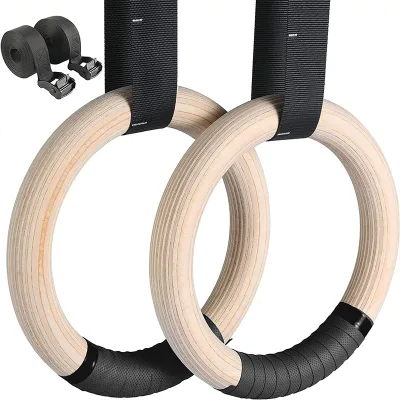
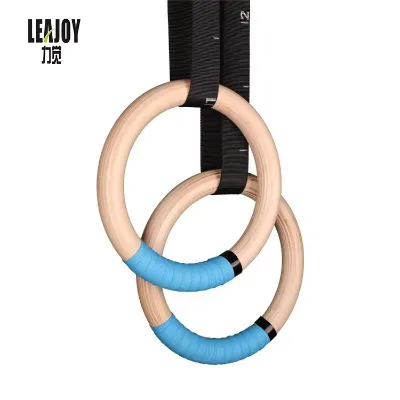
When evaluating brown gymnastics rings, the primary technical differentiator is the material used for the ring body and the suspension straps. Based on available product data, the ring bodies are frequently constructed from wood, specifically noted as "Wood" in several listings. This material choice offers a natural grip and a classic aesthetic that appeals to traditional gymnastics facilities and boutique fitness studios. The color profile is often described as "Wooden" or "Customized," allowing buyers to request specific finishes that match their facility's branding or interior design.
The suspension system is equally critical. The straps are typically made of nylon, a material chosen for its high tensile strength and durability under dynamic loads. Specifications for the straps vary significantly across different product models. Some listings indicate a standard diameter of 28mm or 32mm, while others specify dimensions such as 25mm or 38mm. The length of the ropes also varies, with observed ranges including 2.5 meters and 4.5 meters. Procurement teams must verify the exact rope length required for their specific installation height and user demographic.
Ring diameter is another vital specification. The data indicates standard diameters of 28cm, 23cm, and 25cm. The 28cm diameter appears to be a common standard for general gymnastic training, while smaller diameters might be intended for specific training regimens or younger athletes. Buyers should cross-reference these dimensions with the intended user group, as the "Age Group" is consistently listed as "Adult" or "Adults," suggesting that the primary design focus is on mature users with higher strength requirements.
Compliance, Certification, and Safety Verification
Safety is the paramount concern in gymnastics equipment procurement. While the provided data lists "ISOFolded:Unfolded" under certification, this appears to be a data artifact or a specific product attribute rather than a recognized international safety standard. Similarly, background knowledge mentions standards such as EN 913, ASTM F3101-17, and ISO 9001, but these are categorized as low-confidence background information and should not be asserted as facts for specific products without direct verification.
Buyers must treat certification claims with caution. The presence of a "Certification" field in supplier listings does not guarantee compliance with international safety norms. Instead, procurement officers should request valid, up-to-date test reports from accredited third-party laboratories. The focus should be on verifying that the rings meet the specific load-bearing requirements for the intended application, whether that is a commercial gymnasium, a community park, or a home setup.
Furthermore, the "Condition" of the product is listed as "New," which is a standard expectation but worth confirming in the contract. Buyers should ensure that the supplier provides documentation proving that the wood used is treated for durability and resistance to wear, and that the nylon straps are free from defects that could lead to premature failure. The absence of specific, verifiable certification data in the initial product descriptions necessitates a rigorous due diligence process where the buyer explicitly requests proof of compliance before placing an order.
Cost Drivers and Pricing Dynamics
The pricing for gymnastics rings varies widely, with observed ranges in the market spanning from $0.10 to $1,020 USD. This broad spectrum indicates that the final cost is heavily influenced by the level of customization, the quality of materials, and the volume of the order. The "Low" end of the price range likely corresponds to basic, unbranded sets with standard dimensions and minimal packaging. Conversely, the "High" end reflects premium configurations involving custom logos, specialized wood finishes, and complex packaging solutions.
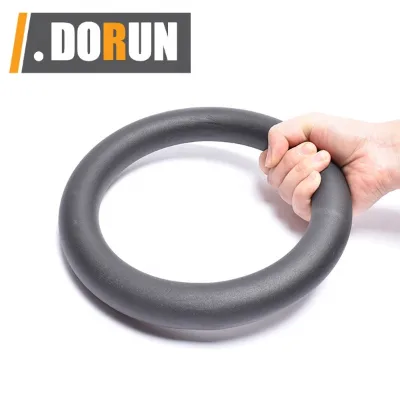
Several factors drive the cost upward. First, the "Customization" attribute is a major cost variable. Suppliers offer customization for size, color, and logo, which incurs additional setup and production fees. Second, the "Type" of product affects pricing; while the core keyword is "brown gymnastics rings," some listings include related items like "Soft Foam Plyo Box," which may be bundled or sold separately, altering the overall cost structure.
The "MOQ" (Minimum Order Quantity) also plays a significant role in unit pricing. The observed MOQ range is between 1 and 500 units. Orders at the lower end of this spectrum will naturally carry a higher per-unit cost due to the fixed costs of setup and logistics. Bulk orders, approaching the 500-unit threshold, typically benefit from economies of scale. Additionally, the "OEM" (Original Equipment Manufacturer) and "ODM" (Original Design Manufacturer) capabilities listed in the data suggest that buyers can negotiate better terms by committing to larger volumes or by utilizing the supplier's design services to create a unique product profile.
Typical Applications and Usage Scenarios
Gymnastics rings are versatile pieces of equipment designed for a wide array of applications. The data explicitly lists "Appliance" categories including "Home," "Gymnasium," "Park," and "Community." This indicates that the product is suitable for both commercial and residential environments. The "Function" is described as "Fitness Training" and "Gymnastic Training," highlighting the dual purpose of the equipment for general fitness enthusiasts and serious athletes.
The "Usage" is broadly defined as "Fitness," but the specific "Exercise Part" is identified as the "Arm." This suggests that the rings are particularly effective for upper-body strength training, including exercises like pull-ups, dips, and rows. The "Gender" is listed as "Unisex" or "Both," confirming that the equipment is designed to accommodate users of all genders.
For commercial buyers, the "Application" field notes "Indoor" and "Outdoor" suitability. This implies that the materials used, particularly the wood and nylon, are treated to withstand varying environmental conditions. However, buyers should verify the specific weather resistance ratings if the rings are intended for outdoor parks or community centers. The "Assembling" attribute indicates that the product requires assembly, which is a standard feature for this type of equipment and should be factored into the installation timeline and labor costs.
Supplier Evaluation and Sourcing Channels
When selecting a supplier for brown gymnastics rings, location is a key factor. The "prod_origin" data points to several regions in China, including "Shandong," "Zhejiang," and "Anhui." These provinces are known for their manufacturing capabilities in sports equipment. Buyers should evaluate suppliers based on their specific location, as this can influence shipping costs and lead times.
The "Customized Service" and "Customize" attributes indicate that many suppliers are open to OEM and ODM requests. This flexibility is crucial for buyers looking to brand the equipment with their own logos or modify the dimensions to fit specific facility requirements. The "Sample Time" is noted as "About 7-15 days," which is a standard lead time for custom samples. Buyers should factor this into their product launch timelines.
Packing is another area for supplier evaluation. The "prod_packing" varies from "1 Set Per White Box; 10 Sets Per Carton" to "Polybag Then Carton" and "Carry Bag& Color Box." The choice of packaging affects the protection of the goods during transit and the presentation upon arrival. For retail buyers, "Color Box" or "White Box" packaging is often preferred for shelf appeal, while bulk buyers might prioritize cost-effective "Carton" packing.
Quality Control and Long-Term Procurement Considerations
Ensuring consistent quality is essential for maintaining the safety and reputation of the buyer's brand. The "Condition" is listed as "New," but this is a baseline requirement. Buyers should implement a quality control protocol that includes visual inspections for wood finish consistency, strap integrity, and hardware durability. The "Standard" specifications, such as "28mm 32mm" or "Ring Dia. 28cm," should be strictly adhered to during the inspection phase.
Long-term procurement considerations involve the durability of the materials. The "Material of Strap" is nylon, which is generally durable, but the specific weave and thickness should be verified to ensure they can withstand repeated high-tension use. The "Wood" material for the rings should be checked for cracks, splinters, or warping, especially if the rings are intended for outdoor use.
The "Customized" nature of the product means that changes in design or materials can impact the supply chain. Buyers should establish clear communication channels with suppliers to manage these changes effectively. Additionally, the "OEM" and "ODM" capabilities suggest that buyers can work with suppliers to develop proprietary designs, which can provide a competitive advantage in the market. However, this requires a robust contract that defines intellectual property rights and quality standards.
Comparative Analysis of Product Variants
To assist in decision-making, the following table summarizes the key variations observed in the product data. This comparison highlights the differences in specifications, materials, and packaging that buyers should consider.
| Feature | Variant A (Standard) | Variant B (Customized) | Variant C (Heavy Duty) |
|---|---|---|---|
| Ring Material | Wood | Wood (Custom Finish) | Wood (Treated) |
| Strap Material | Nylon | Nylon | Nylon (Reinforced) |
| Ring Diameter | 28cm | Customizable | 25cm / 28cm |
| Strap Diameter | 28mm / 32mm | Customizable | 38mm |
| Rope Length | 2.5m | Customizable | 4.5m |
| Packaging | White Box / Carton | Color Box | Carry Bag & Color Box |
| Target Application | Home, Gymnasium | Community, Park | Professional Training |
| Customization | Logo Only | Size, Color, Logo | Full OEM/ODM |
This table illustrates that while the core product remains consistent, the specific configuration can vary significantly based on the buyer's needs. Variant A represents a standard off-the-shelf option, suitable for general fitness centers. Variant B offers flexibility for branding and specific aesthetic requirements, ideal for boutique studios. Variant C appears to be designed for more demanding environments, with longer ropes and potentially reinforced straps for professional training.
Conclusion
Sourcing brown gymnastics rings requires a careful balance of technical verification, supplier evaluation, and cost management. The available data indicates a robust market with diverse options in terms of materials, dimensions, and customization. However, the lack of definitive certification data in the initial product descriptions necessitates a proactive approach to safety verification. Buyers must prioritize suppliers who can provide transparent documentation regarding material quality and load-bearing capacity. By focusing on the specific needs of their target application—whether home, commercial, or community—procurement professionals can secure high-quality equipment that meets both safety standards and operational goals. The flexibility offered by OEM and ODM capabilities further enhances the value proposition, allowing buyers to create unique products that stand out in a competitive market.
FAQs
What materials are used for brown gymnastics rings?
The ring bodies are constructed from wood, offering a natural grip and classic aesthetic. The suspension straps are made of durable nylon, selected for high tensile strength and resistance to dynamic loads during training.
Can buyers customize the size and color of the rings?
Yes, customization is available for size, color, and logo to match specific facility branding. Buyers can request wooden finishes or solid colors, with options for OEM and ODM services to alter dimensions.
Which specifications define the standard ring diameter and strap length?
Standard ring diameters include 23cm, 25cm, and 28cm, while strap diameters range from 25mm to 38mm. Rope lengths vary, with common options being 2.5 meters or 4.5 meters depending on the model.
How are the gymnastics rings packaged for shipping?
Packaging typically involves one set per white box with ten sets per carton, or polybags inside cartons. Some premium options include carry bags and color boxes for retail presentation and product protection.
What is the typical sample time for custom orders?
The sample time is approximately 7 to 15 days for custom configurations. This lead time allows manufacturers to produce prototypes with specific logos, sizes, or finishes before full-scale production begins.
Where are these gymnastics rings manufactured?
Products originate from manufacturing hubs in China, specifically in Shandong, Zhejiang, and Anhui provinces. These regions are known for their capabilities in producing sports equipment with varying levels of customization.
What is the minimum order quantity for these rings?
The minimum order quantity ranges from 1 to 500 units depending on the supplier and customization level. Lower MOQs suit small purchases, while bulk orders often benefit from economies of scale.